Friends Fight Fentanyl
YOUR FRIENDS ARE WORTH FIGHTING FOR
Friends Fight Fentanyl was a public awareness campaign created for Yamhill County Health and Human Services to help educate middle and high school students about the dangers of fentanyl and provide practical tools for responding to an overdose.
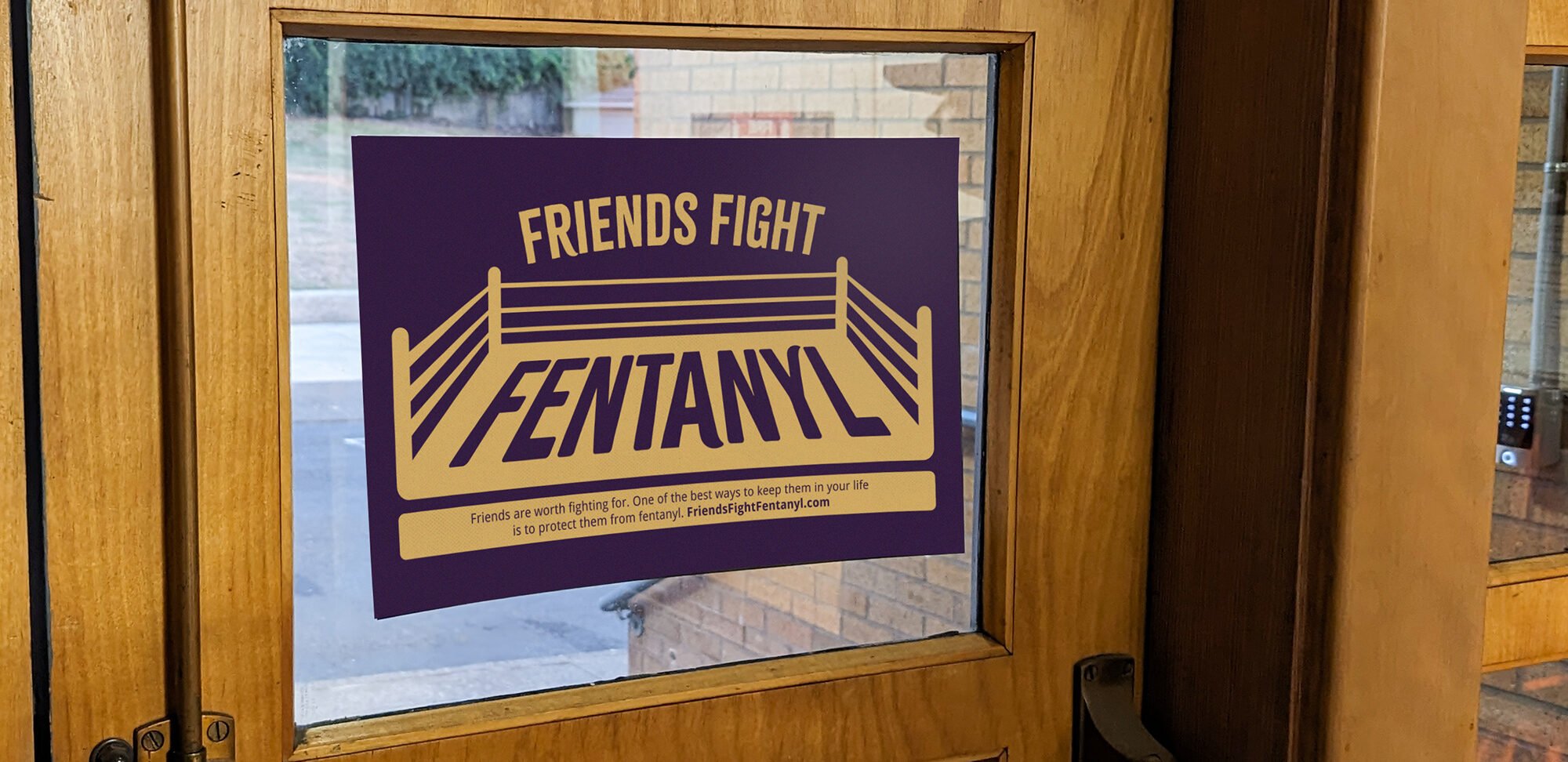
As part of the design team, I helped develop a visual approach centered around a boxing ring as a metaphor for fighting back against fentanyl and fighting for your friends. Rather than relying on fear-based messaging, the campaign focused on the strength of youth friendships and used approachable language to reduce anxiety around a difficult topic. The goal was to create materials that felt engaging, accessible, and empowering while encouraging young people to recognize the signs of an overdose and take action when it matters most.
The campaign was applied across a variety of print and digital touchpoints, requiring a cohesive visual system that could communicate complex information clearly and consistently to a youth audience.
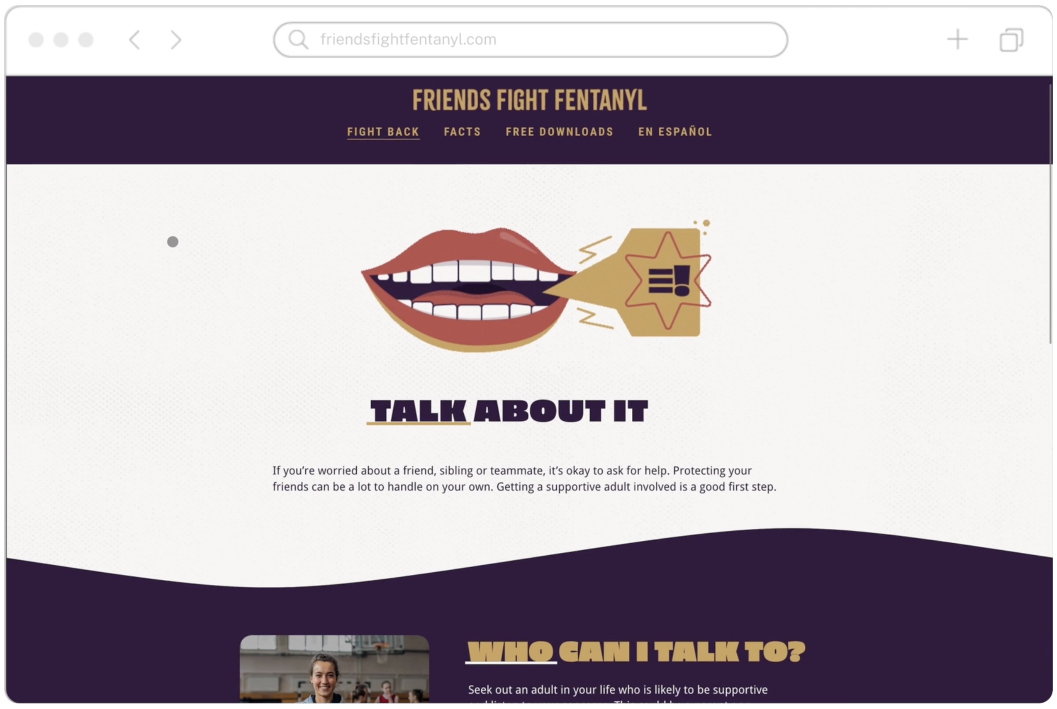
A key part of the campaign was creating a website that could serve as a central resource for youth, parents, and educators. As part of the design team, I helped develop a clear and approachable user experience that made important information easy to find and understand. Because the campaign served communities with large Spanish-speaking populations, the site was designed in both English and Spanish.
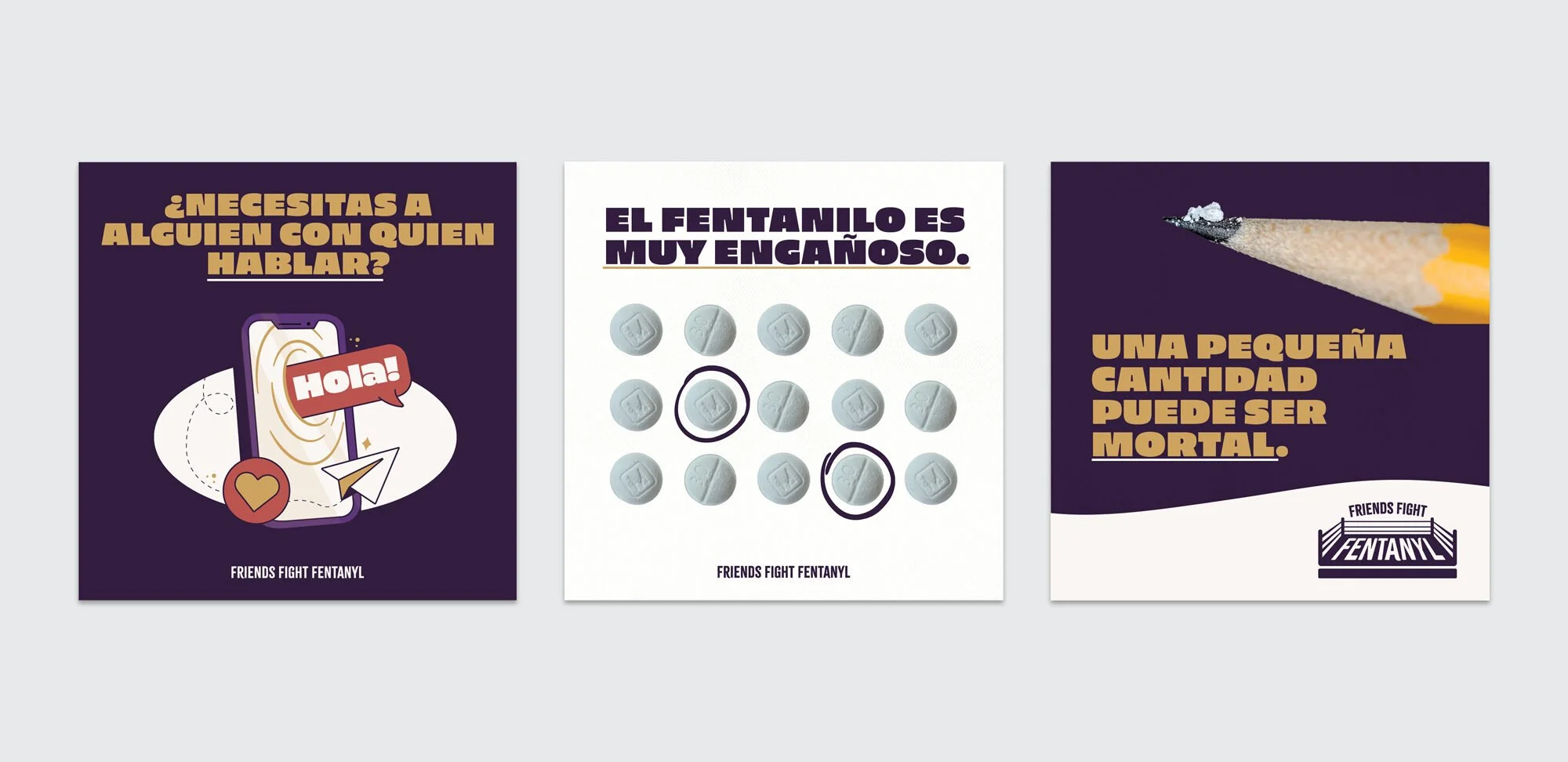
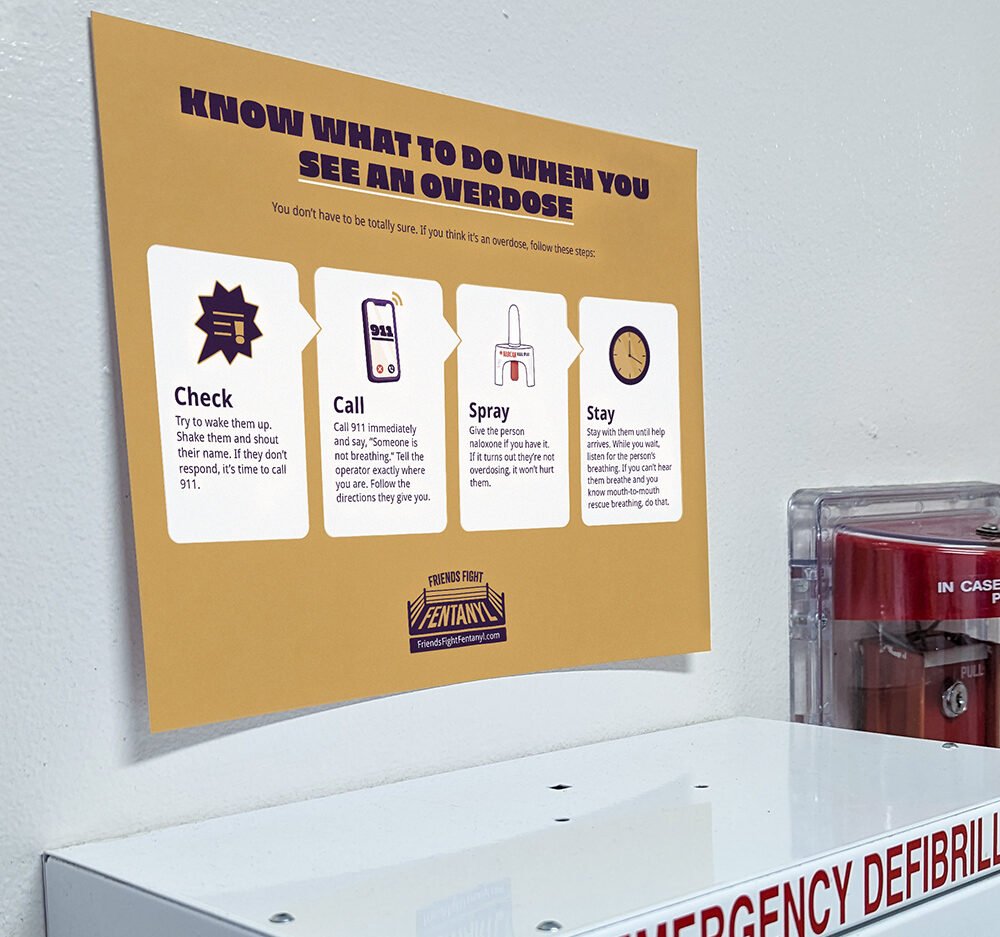
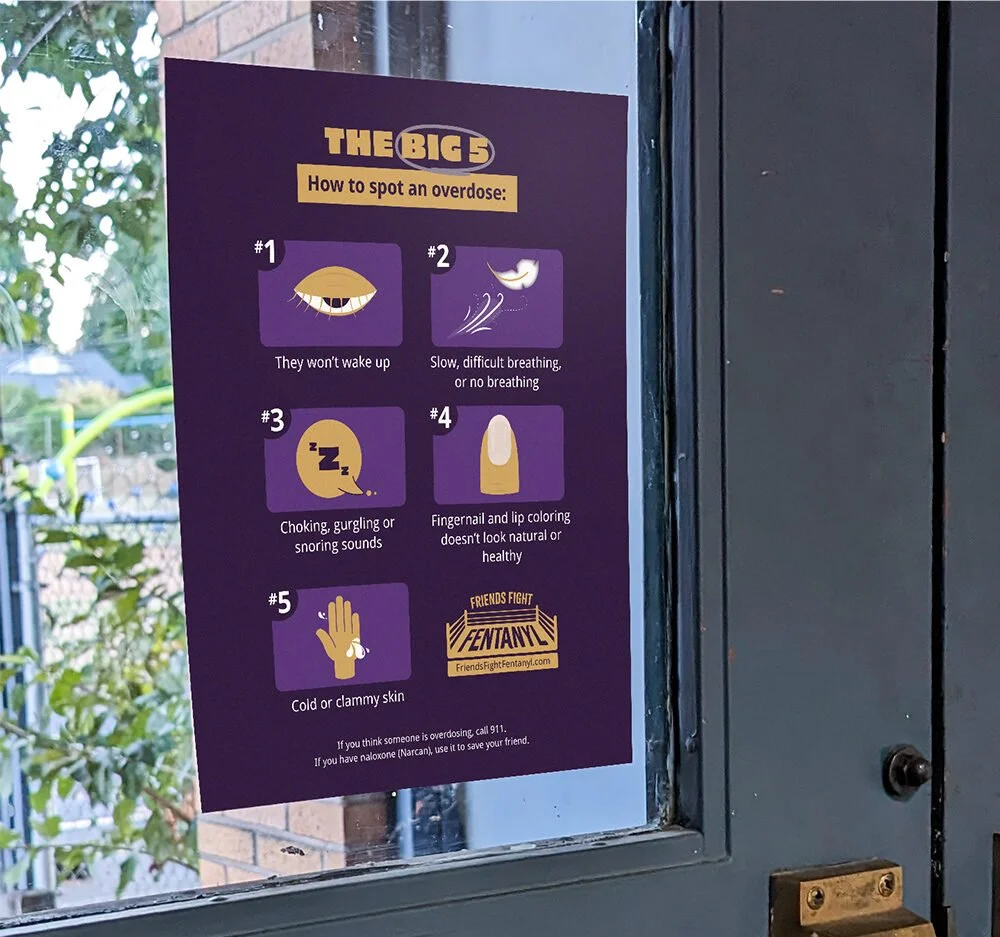
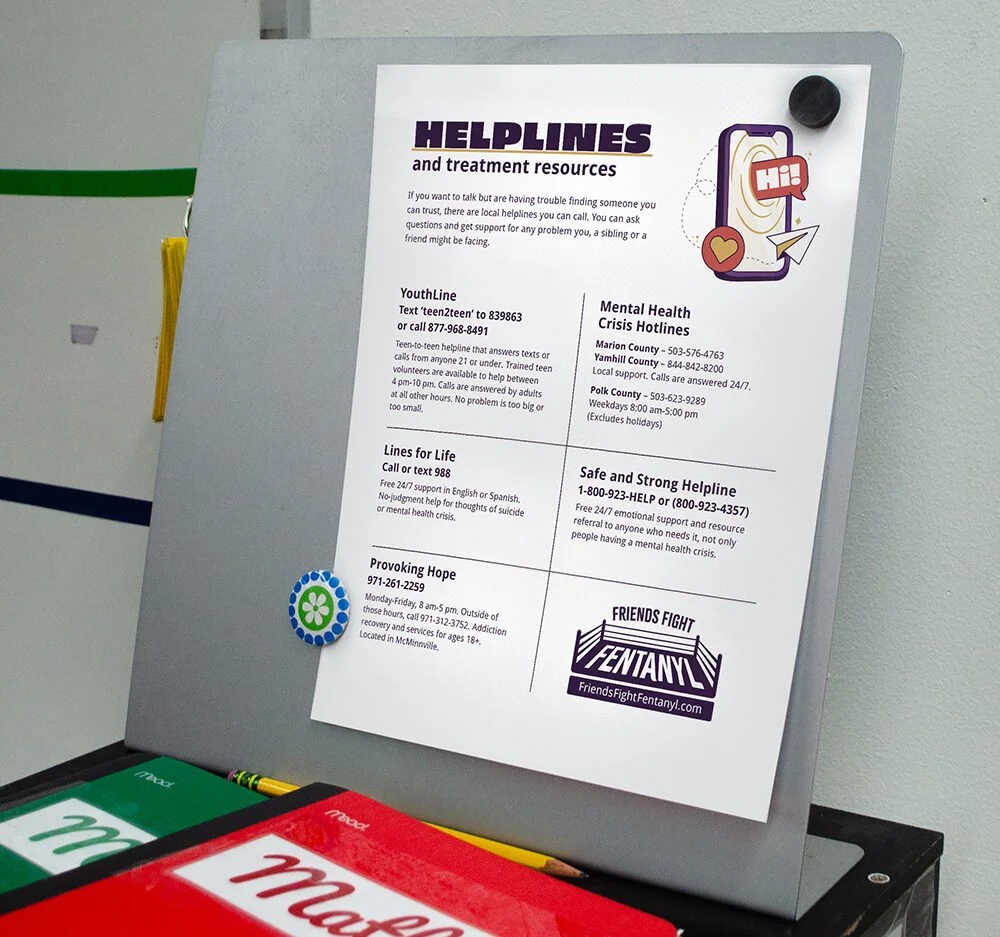
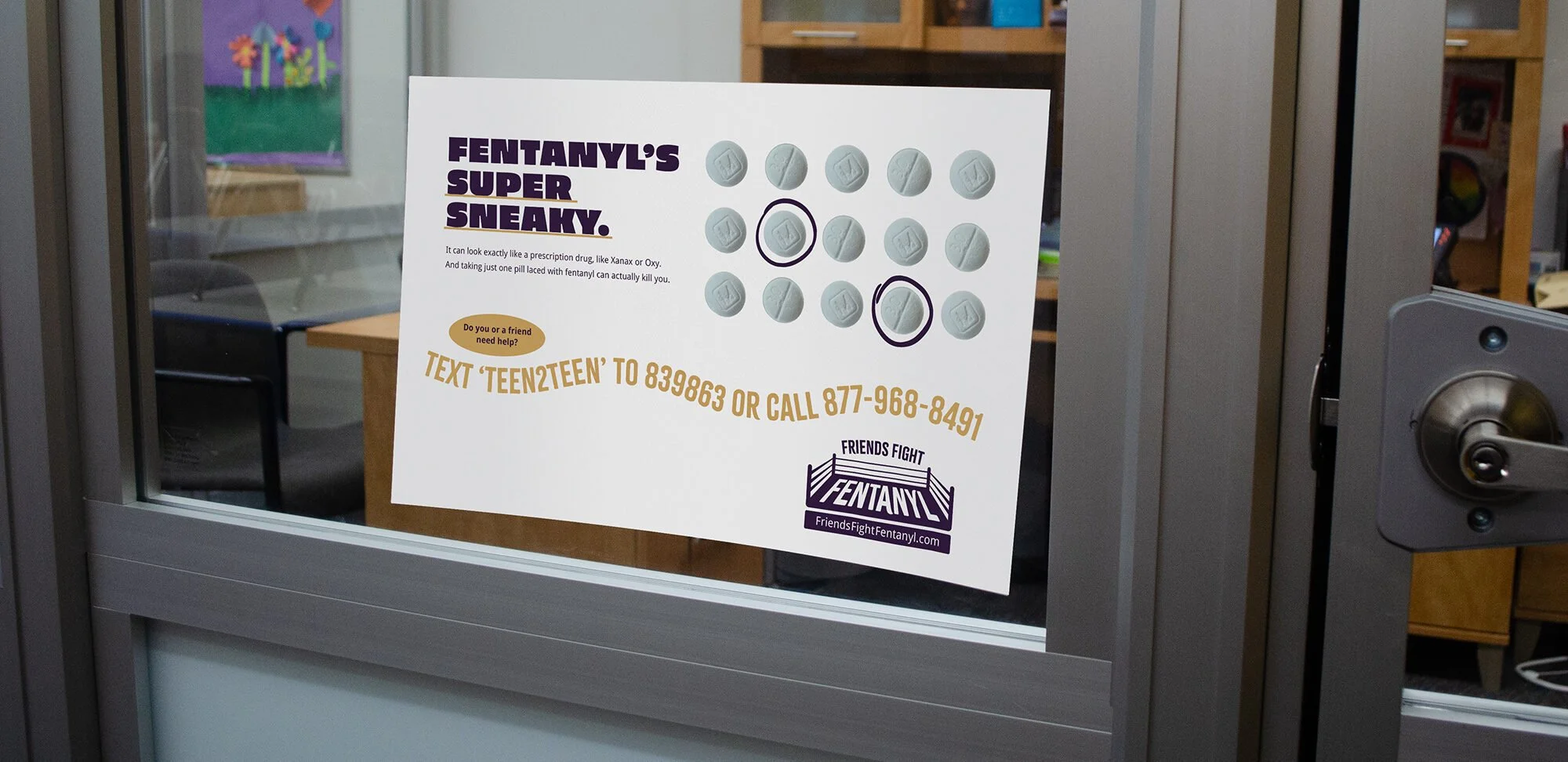
To extend the campaign beyond the website, I helped develop a suite of print and digital materials that could be distributed by schools, community organizations, and other local partners. These included posters, flyers, palm cards, and social media graphics designed to work as a cohesive system while allowing for co-branding across different organizations.
Because schools were a primary distribution channel, the campaign launched at the beginning of the school year to reach students when they were most engaged. The materials focused on clear, actionable information, including how to recognize the signs of a fentanyl overdose, how and when to administer Narcan (naloxone), and where to find local mental health and substance use support resources. A key design consideration throughout the project was presenting critical information in a way that felt approachable, easy to navigate, and accessible to a youth audience.